
Criminal Court Cases in Otero County
Otero County criminal court cases do not all start or finish at the same bench. The Twelfth Judicial District Court hears felony prosecutions. Alamogordo Magistrate Court handles state-law misdemeanors, DWI, traffic matters, and the first steps in felony cases. Municipal courts keep their own limited dockets for ordinance violations, petty misdemeanors, traffic, and DWI within their authority. Municipal courts do not hold jury trials.
A felony arrest may first produce a magistrate entry for appearance or preliminary work, followed by a separate Otero County District Court case after charges are filed. The clerk, not the arresting agency, keeps the judicial file. That file records what prosecutors chose to pursue and what the court decided. A sheriff report or jail booking can help identify the event, but neither replaces the complaint, judgment, dismissal, or sentence in the court record.
Searching Otero County Case Lookup
The free New Mexico Case Lookup is the broad first stop for Otero County court cases. It needs no registration. It covers appellate, district, magistrate, metropolitan, and limited municipal data. Search by a full case number when one is known. For a name search, add the first and middle names and then inspect the listed court location. A common name can return cases from elsewhere in New Mexico.
The official New Mexico Case Lookup screen shows how a name or case-number path begins.
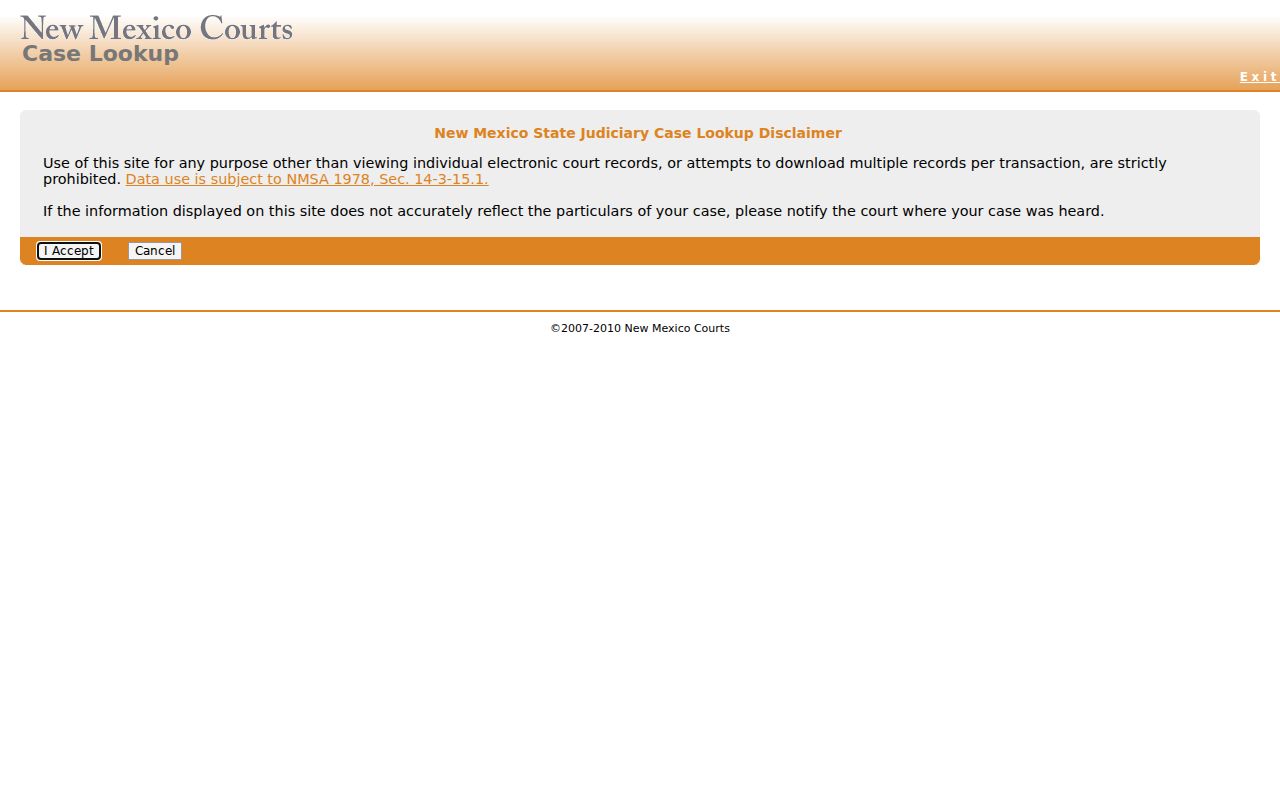
Use Otero or the Twelfth Judicial District as the venue check, then read each charge and event rather than stopping at the result list.
Otero County Case Record Searches
Start online, but finish with the custodian that holds the needed item. Case Lookup supplies a docket history, not the underlying PDFs. The Otero County court research unit handles detailed or older material, while registered re:SearchNM users may see documents allowed by their access tier.
- Open New Mexico Case Lookup and choose the name or case-number path.
- Enter the legal name or full number, then narrow the results to the Otero County court location and criminal case type.
- Open the matching docket. Compare filing date, party role, charge details, and event history before deciding it is the right person.
- Read each charge-level disposition and the judgment entry. A general status such as “disposed” does not say whether the count ended in conviction or dismissal.
- Request pleadings, hearing audio, certified copies, or older files from the Otero clerk, giving the case number and document title or date.
The public interface uses these core fields. Labels may change, so use the current screen as the final authority.
| Field Label | Type | Required | Notes |
|---|---|---|---|
| Search Type | Tab or radio | Yes | Name and Case Number are separate paths |
| Last Name | Text | Name path | Use the legal surname; broad names return broad results |
| First / Middle Name | Text | Optional | Helps narrow common names |
| Case Number | Text | Case path | Enter the full number when known |
| Court Location | Selection | Optional | Narrow to Otero or the right limited court |
| Case Category / Type | Selection | Optional | Use criminal filtering when offered |
The Judiciary comparison of public access and re:SearchNM explains why one view can show more than another.
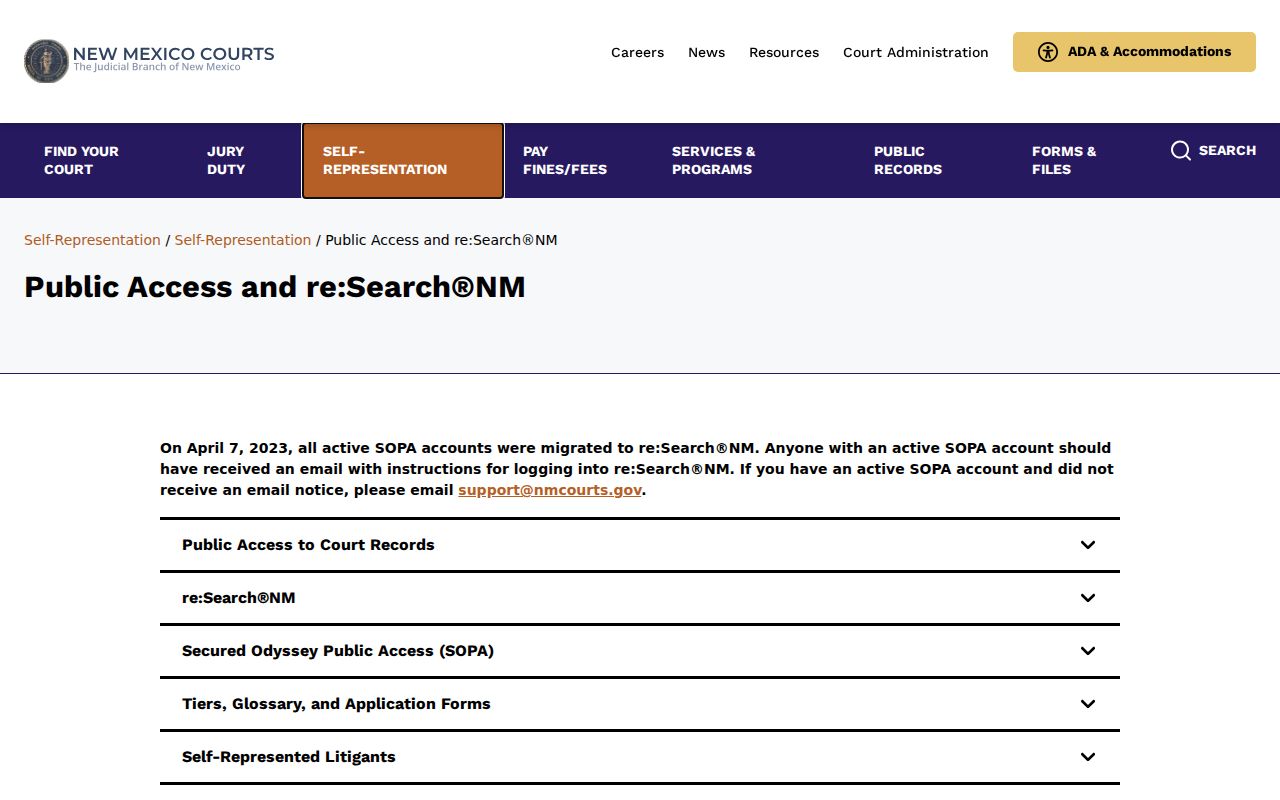
That split matters when a docket entry is visible but the motion, plea, order, or judgment itself is not.
Otero County Court Copy Workflow
The Otero District Court is at 1000 New York Avenue, Alamogordo, NM 88310. Its clerk counter is open weekdays from 8:00 a.m. to 4:00 p.m., including lunch. Call 575-437-7310 and use extensions 100, 104, or 158 for criminal case information. Copy questions route to extension 112. Written research and copy requests can go to 12thdistrictresearch@nmcourts.gov, while the general clerk address is oterodistrictclerk@nmcourts.gov.
Otero District Court Clerk
1000 New York Avenue
Alamogordo, NM 88310
575-437-7310, ext. 112
Weekdays, 8:00 a.m. to 4:00 p.m.
The official Otero District Court contact page publishes the clerk routes and access details.
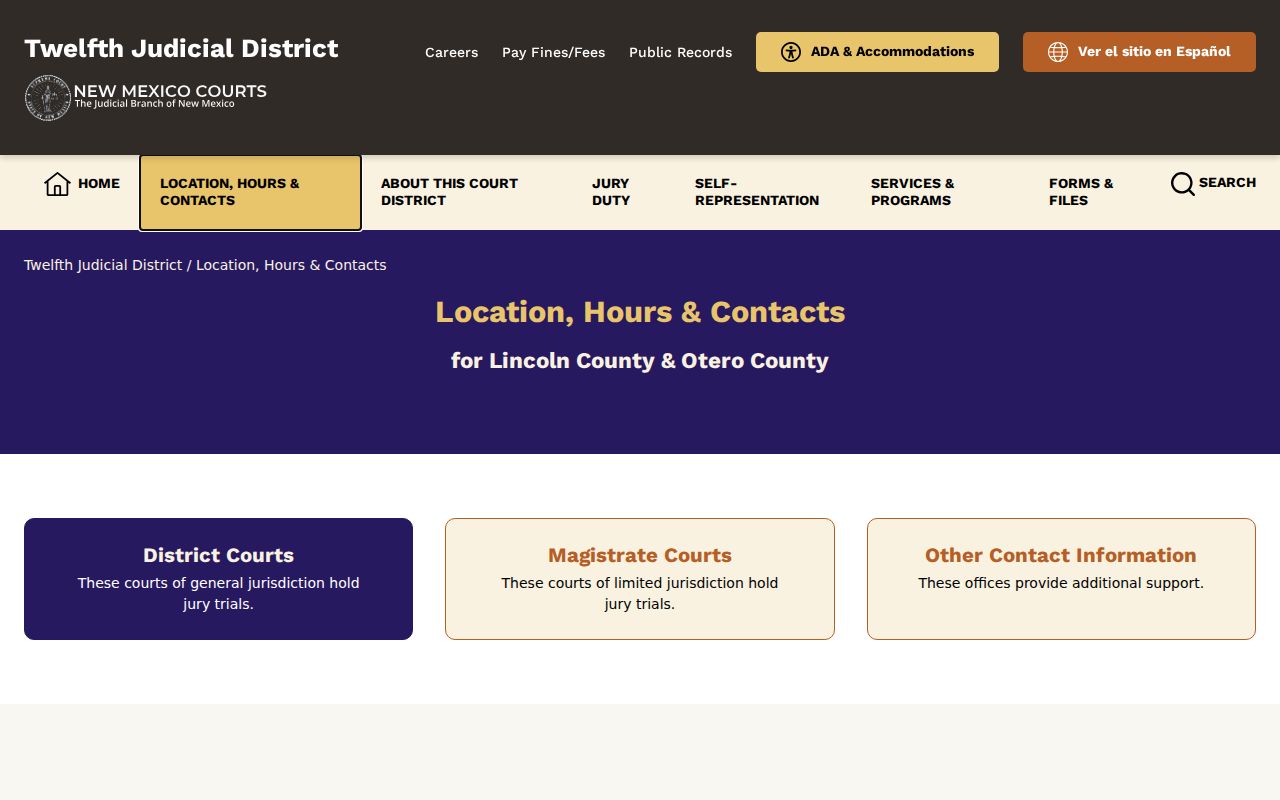
Give the clerk a case number, party, requested document, preferred delivery method, and whether certification is needed. Ask for a cost estimate before a large copy order.
What a Criminal Case File Contains
An Otero County criminal case file is organized around the case number and court events. It can identify the filed charges, parties, counsel, judicial officer, hearings, rulings, outcome, and sentence. Free Case Lookup offers index and history data. Public documents may be available through the clerk or a permitted re:SearchNM tier, subject to redaction and access rules.
| Case Number and Court | Identifies the venue, case type, filing year, and unique matter |
|---|---|
| Charging Document | States the allegations formally filed by the prosecutor |
| Docket Entries | Chronological filings, motions, orders, hearings, and warrant events |
| Parties and Counsel | Lists public party roles and attorney appearances |
| Disposition and Judgment | Shows the charge-level outcome, such as dismissal, plea, acquittal, or conviction |
| Sentence and Conditions | Records custody, probation, fines, or other terms imposed by the court |
Repository and booking records use different organizing keys. DPS builds a person-indexed history from fingerprint-linked submissions. A jail builds a custody event. Only the court record follows the filed case through its judicial result.
Two Otero County Court Portals
Case Lookup and re:SearchNM serve different access needs. The first is free, open without an account, and useful for locating a docket. It does not provide pleadings or other document images. re:SearchNM requires registration and a tier agreement. Its secured Odyssey access can include documents for users whose tier permits them, and Tier 1 includes many criminal case types.
The registered re:SearchNM portal begins behind an access gate.
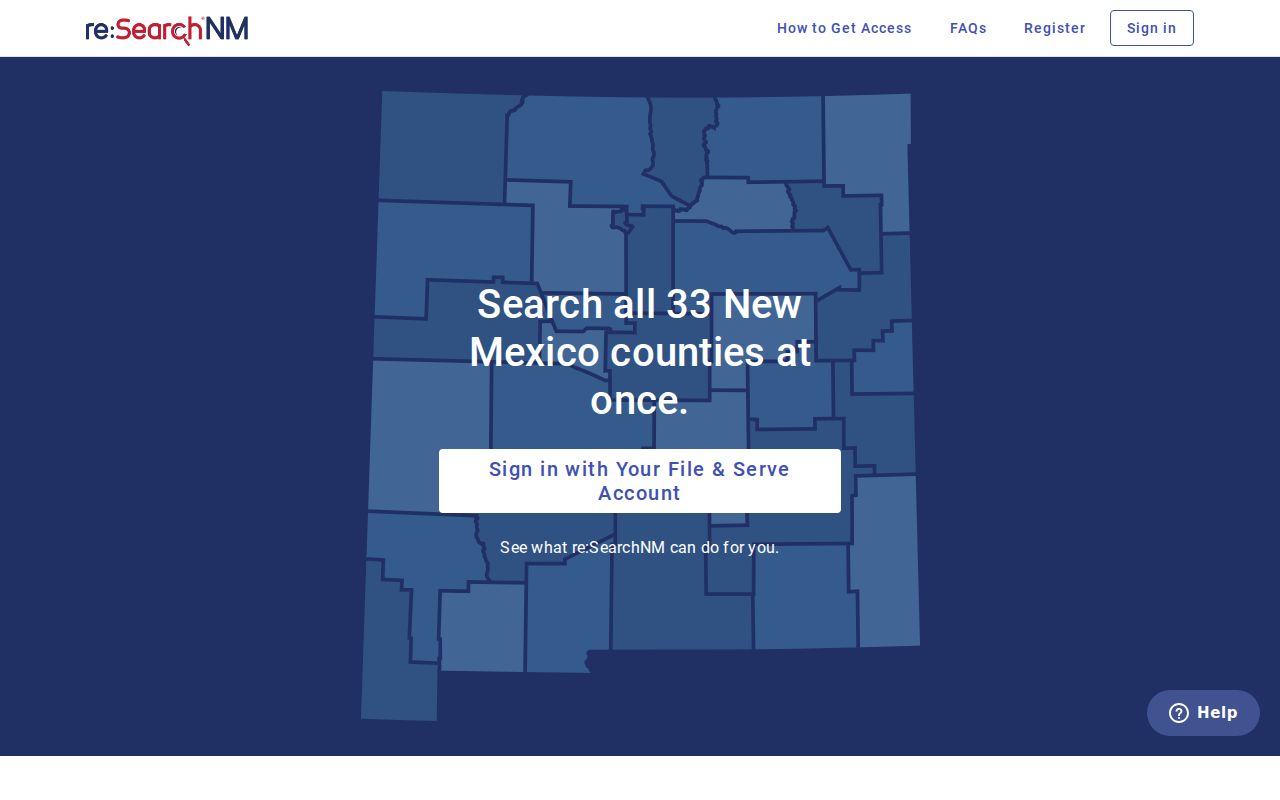
Neither route makes protected details public. If a needed paper is absent, the Otero County clerk remains the direct source for inspection, copies, certification, hearing audio, or clarification.
Note: Cases from before 1997 may require the Judiciary’s older-record request process rather than a routine online search.
Criminal Case Stages in Otero County
A court case begins when charges are filed, which may happen after an arrest or by summons. Arraignment places the charge and plea on the record. Pretrial work can include discovery, motions, negotiations, and hearings. A plea or trial resolves the contested charge. The court then enters a disposition and, after a conviction, a sentence. An appeal or probation-revocation filing can add later entries.
Case flow: Charges Filed › Arraignment › Pretrial › Plea or Trial › Disposition › Sentencing
A magistrate first appearance is not a felony trial. If a felony moves to District Court, match the related entries by name, dates, charge facts, and any linked case number. The broader Otero County criminal records overview helps place that court trail beside the separate agency and repository records.
Filtering Otero County Court Results
The Twelfth Judicial District covers both Otero and Lincoln Counties. A result marked only by district name still needs a county and location check. This is especially important for shared forms and web pages. Alamogordo Magistrate Court is at 1376 E. Ninth Street and can be reached at 575-437-9000. Confirm current hours in the state court directory before an in-person visit.
Also check the kind of law and place involved. A city ordinance may remain municipal. A state misdemeanor can be magistrate work. A felony ends in District Court if prosecuted. Mescalero, Holloman Air Force Base, or another federal setting can create a tribal or federal case that does not appear as an Otero County state prosecution. Start with venue, court level, and filed charge, then match the person.
Reading Otero County Case Dispositions
A docket status marked “disposed” means court action has reached an ending point. It does not, by itself, mean guilty. Open the individual count or obtain the final order. Prosecutors can decline, amend, replace, or dismiss charges. A plea may cover fewer counts than the original filing, while acquittal follows a not-guilty decision at trial. Judgment and sentence are the strongest records for the final result.
- Arraignment
- The hearing where charges and a plea are placed on the record.
- Disposition
- The result for a charge, such as conviction, dismissal, or acquittal.
- Judgment
- The court’s formal statement of the result.
- Sentence
- The terms ordered after a conviction.
If a public entry appears wrong or lacks a final result, contact the Otero County clerk first. DPS repository corrections may also require certified court proof when a disposition failed to reach the person-indexed history.
Access Rules for Case Records
New Mexico court records are generally open, but online display is narrower than all access available through a clerk. Rule 1-079 NMRA and Supreme Court policy protect personal identifiers. Juvenile criminal cases after July 1, 2007 are omitted from public Case Lookup, as are Family Violence Protection Act order cases after July 1, 2008. Sealed or expunged files, protected addresses, victim-sensitive facts, and other confidential material may be withheld or redacted.
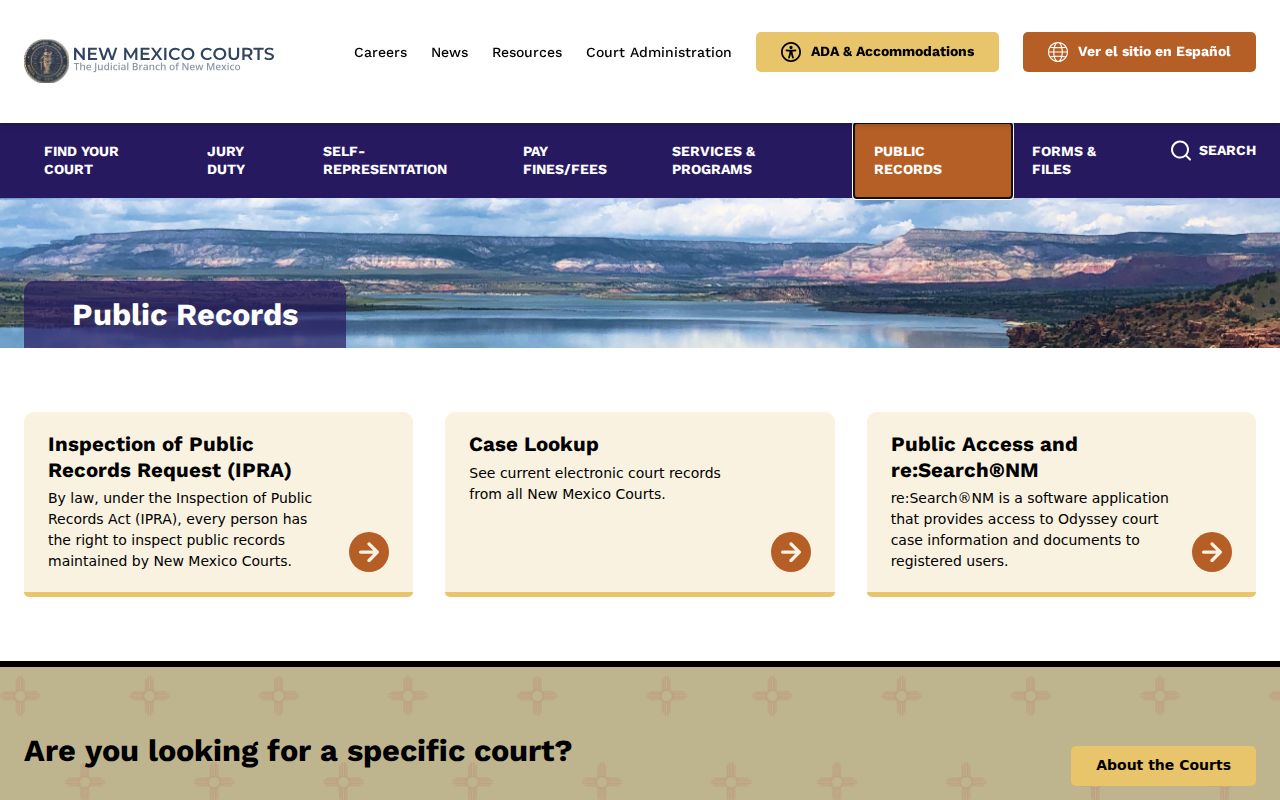
The Judiciary’s public-records gateway explains court access and records requests.
A missing online result is not proof that no Otero County case exists. Municipal coverage is limited, older records can need manual research, and lawful restrictions can remove a matter from public view. Ask the right clerk what access rule applies without requesting protected details.