
Otero County Sex Offender Checks
The official starting point is the New Mexico DPS Sex Offender Registry. DPS Law Enforcement Records Bureau manages the OffenderWatch data system, while the Otero County Sheriff records local registrations. That split matters. The public portal is best for a broad name, place, or map-style search. The sheriff is the right office for questions about a local registration, a suspected failure to report, or the current process for an Otero County registrant.
Prepare more than a name when possible. A city, ZIP code, known address, alias, or physical detail can help distinguish similar results. Read the full profile rather than relying on a list view. A listing reflects statutory registration data and may change when a person moves or when compliance work is pending. It does not show every court event or every offense in a person’s past. For that wider question, use the county’s court case lookup as a separate channel.
Otero County Registry Office
Otero County registrants report through the Sheriff’s Office at 3208 North White Sands Boulevard in Alamogordo. The main number is 575-443-2935. The official sheriff staff directory identifies a Sex Offender Registration Officer, and the county’s FY 2025-2026 budget separately funds a sex-offender compliance position. Those facts show that registration work is a defined county function, not merely an extension of ordinary patrol records.
Call before going to the office. The research did not locate published registration hours or a standing appointment schedule, so the main line is the sound way to confirm what the officer needs. Public searchers can also use that contact to report a suspected address or compliance issue. Emergencies still go to 911. The sheriff can check the local registration process, while DPS remains the state database administrator and can be reached through the registry unit at dps.sorna@dps.nm.gov or 505-476-2444.
Otero County Sheriff
Sex Offender Registration Officer
3208 N. White Sands Blvd.
Alamogordo, NM 88310
575-443-2935
New Mexico DPS Sex Offender Registry Searches
The state registry supports several paths, and each answers a different question. A name search looks for a person. An address, city, ZIP, or county filter looks for registered addresses in a place. OffenderWatch controls may change, so use the labels displayed on the live form and do not assume a radius that the portal does not offer. Follow these steps for an Otero County search:
- Open the official DPS registry and read its conditions of use.
- Enter a name or use place fields such as address, city, ZIP code, and Otero County.
- Compare the result list with known lawful identifiers, then open the matching profile.
- Read the status, registered address, offense, jurisdiction, and duty details, and ask the sheriff to verify a local concern.
| Field label | Type | Required | Use |
|---|---|---|---|
| Last Name | Text | Optional | Starts a name search; partial-name behavior may change. |
| First Name | Text | Optional | Narrows a surname result. |
| Address | Text | Address path | Supports a location search. |
| City / ZIP Code | Text or select | Optional | Focuses results on an Otero County community. |
| County | Dropdown | Optional | Select Otero for countywide results. |
| Radius | Dropdown | Address path | Use only the options shown by the live interface. |
| Map / List | View control | No | Switches the result presentation where enabled. |
When a broad Otero County registry search returns several profiles, narrow the place fields before relying on physical details alone. If an address-proximity alert option appears in the live interface, read its trigger and coverage notice before enrolling. The research did not confirm exact Otero alert radii, so the portal’s current choices control.
Otero Registry Boundary Searches
Otero County includes an unusual mix of jurisdictions. Mescalero Apache lands, Holloman Air Force Base, federal land, nearby county lines, and out-of-state connections can make a county-only filter too narrow. The U.S. Department of Justice National Sex Offender Public Website provides the cross-jurisdiction layer. It searches participating state, territorial, and tribal public registries through one official federal gateway.
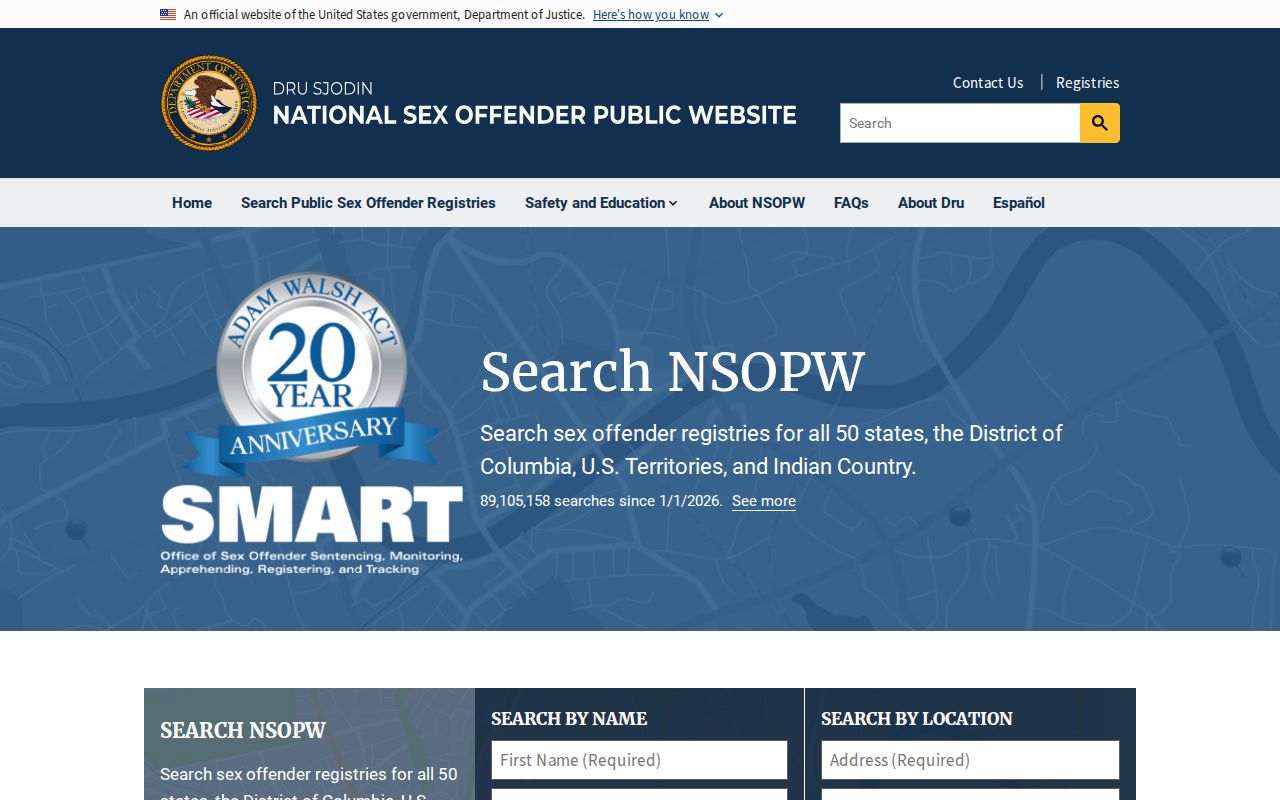
The national interface is most useful when an address lies near a boundary or a conviction came from another jurisdiction. It does not replace Otero County Sheriff verification. Each contributing registry controls its own data, update schedule, and public fields. If a result does not appear, change the search from county to name or address, check spelling and aliases, and consult the relevant jurisdiction rather than treating no result as proof that no duty exists.
Registry Profiles: What They Show
An Otero County registry profile is a statutory public notice, not a full rap sheet. Public fields vary with the offense and governing law. A profile may display enough identity detail to distinguish the listed person and enough offense detail to explain the registration duty. Some vehicle or school information may appear only when the statute authorizes it. Medical, investigative, and unrelated private data are not ordinary public profile fields.
| Name and Aliases | Primary listed name and other names included in the public registry. |
|---|---|
| Photo and Description | Photograph and lawful physical descriptors such as height, weight, hair, eyes, scars, marks, or tattoos. |
| Registered Address | Residence or other location information displayed under current law. |
| Offense Details | Offense description, statute, conviction date, and conviction jurisdiction where public. |
| Registration Duty | Registration jurisdiction, duration, reporting frequency, and related status fields. |
| Compliance Status | The status shown by the portal, subject to verification with the registering sheriff. |
Compare a profile’s jurisdiction and offense fields carefully. DPS translates tribal, federal, military, foreign, and other-state convictions to the closest New Mexico category. That work can make the New Mexico duty look different from the label used by the sentencing court. A person may also have court history that never belonged on the registry. The registry answers a narrow safety question: whether public registration information is available under the Sex Offender Registration and Notification Act.
Missing Otero Registry Results
A blank Otero County address search can have several causes. The address may sit outside the chosen area, the name may use an alias or different spelling, a move may still be under review, or the person’s offense may not produce the public display a searcher expects. Search by name and place separately. Try the state portal and NSOPW. Then contact the Otero County Sheriff or DPS registry unit when a specific, good-faith safety concern remains.
Do not infer a violation from a portal mismatch. The sheriff and DPS investigate compliance, and the public should report facts instead of confronting a person. Give the agency a name, address, date, and the exact inconsistency observed. That lets trained staff compare local registration records with OffenderWatch. If the concern involves an immediate threat, call 911 rather than using an online registry form as an emergency channel.
Note: A portal result can lag a move or compliance inquiry, so direct agency verification is the sound final step.
Registration Levels and Duties in New Mexico
New Mexico does not present registration through simple public labels such as low, medium, and high risk. The state uses offense-based schedules under NMSA 1978 Sections 29-11A-3 through 29-11A-5. Duration and verification frequency turn on the enumerated offense and any translated out-of-jurisdiction equivalent. That is why a searcher should read the actual offense and duty fields rather than inventing a risk tier from the length of registration.
| Category | Duration and frequency | Public meaning |
|---|---|---|
| Enumerated lifetime offenses | Life; verification generally every 90 days | A public profile appears when current law authorizes it. |
| Enumerated ten-year offenses | Ten years; annual renewal before December 31 | Visibility depends on the current statute and offense. |
| Out-of-jurisdiction equivalent | DPS maps the conviction to the closest New Mexico category | The translated duty controls duration and frequency. |
Registrants must report required changes to the county sheriff. Willful failure to comply is punishable under state law. The live statutory text in New Mexico OneSource should control over a shorthand label or an old summary. Registration is also distinct from expungement. Certain sex offenses are excluded from relief under the Criminal Records Expungement Act, so a person should not assume that a sealed court view removes a separate statutory registration duty.
Otero Registry and Expungement
Registry status and ordinary criminal-record access are separate legal questions. The DPS expungement overview explains the state process and its exclusions. The official page pictured below helps readers distinguish a petition to restrict qualifying criminal records from the offense-based duties administered by the sex offender registry.
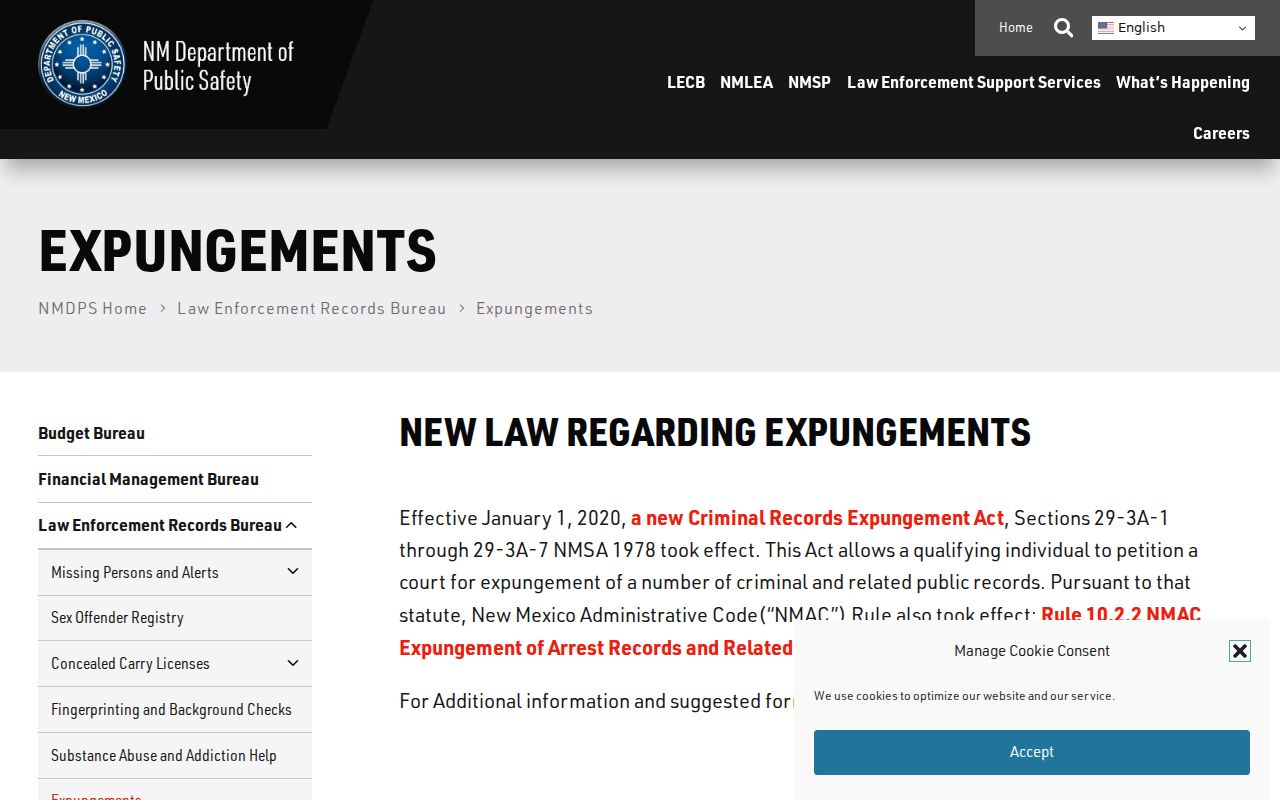
New Mexico excludes sex offenses from the general expungement pathway described in the Criminal Records Expungement Act. That does not authorize a broad conclusion about any person’s case. Court orders, conviction statutes, and registration provisions must be read together. For filed forms and court procedure, the New Mexico Judiciary expungement guidance is the matching official court source.
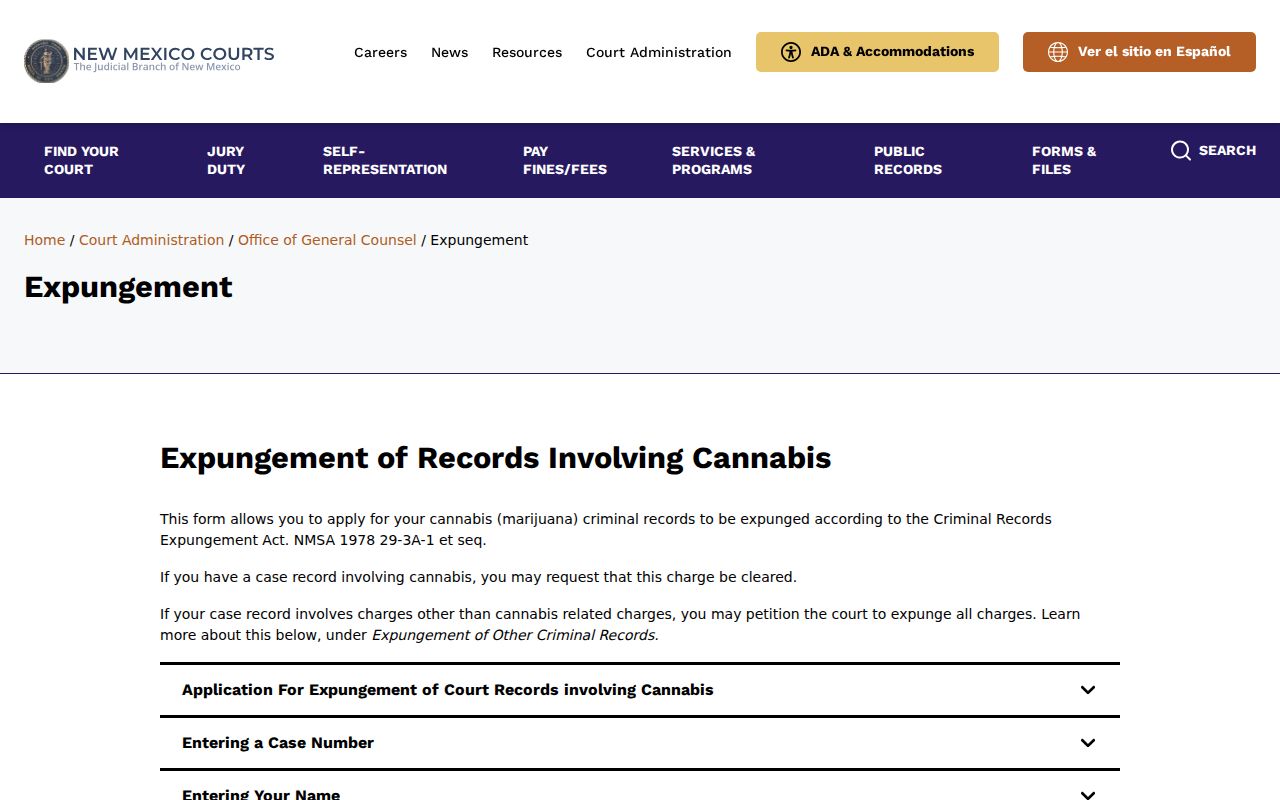
The court resource reinforces the core point: a court-record remedy is not an informal request to remove a public registry entry. Anyone addressing their own record should use current official forms and legal advice for the exact conviction and duty at issue.
Report Otero Registry Noncompliance
The proper route for suspected local noncompliance is the Otero County Sheriff’s registration officer. Report what was observed and avoid conclusions the public record cannot support. DPS also accepts registry questions through its SOR unit. The two offices serve linked roles: the sheriff works with local registrations and verification, while DPS operates the statewide repository and translates qualifying convictions from other jurisdictions.
Community members should not conduct their own compliance sweep. A person’s presence at a place does not by itself establish residence, a reporting lapse, or a crime. Give officials the address, date, time, and registry detail that raised concern. This keeps Otero County safety reports useful while leaving fact finding to law enforcement. The county budget’s dedicated compliance post supports that official route.
Using Registry Information Lawfully
Registry information is published for community awareness and personal or family safety. It can help a resident understand a listed address, recognize the offense and duty fields, and decide whether to ask an official office for verification. It does not authorize trespass, confrontation, threats, punishment, or assumptions about anyone who does not appear. A registry profile is not proof of a new offense, and it should never be treated as a complete criminal history.
Use the registry lawfully: DPS and NSOPW prohibit threats, intimidation, harassment, vigilantism, or crimes based on registry data; NMSA 1978 Sections 29-11A-1 through 29-11A-10 govern registration and compliance.
Use official emergency channels for urgent danger and the sheriff’s registration contact for a non-urgent discrepancy. For neighborhood awareness near tribal land, federal property, or a county line, broaden the official search through NSOPW. These steps keep the focus on verified safety information and avoid harm caused by an incomplete match, an old address, or a misunderstood legal duty.